Saturday, September 30, 2006

Early Settlers

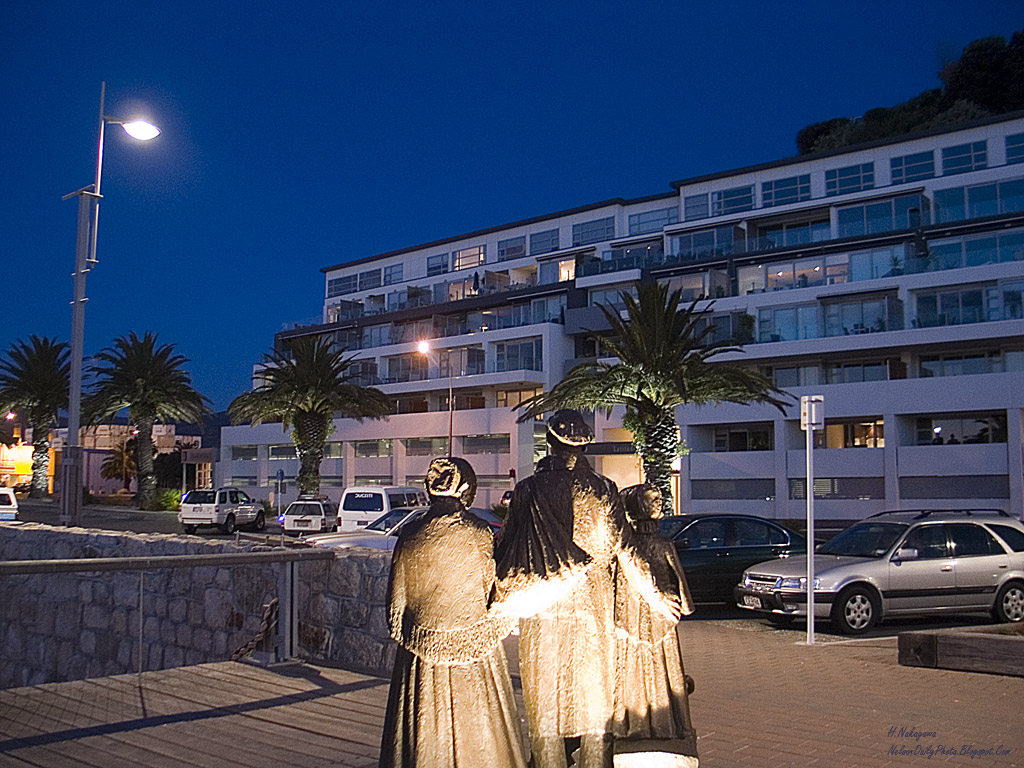
From Nelson Public Art and Sculpture Walks map: "Early Settlers' Statue. The Bronze statue shows a family arriving on Wakefield Quay in 1842. It was commissioned in 2005 by former Nelson sculptor Anthony Stones."

The sculptor in England intended this work to face the sea; the Nelson City Council installed it facing the new waterfront apartments because, they reasoned, people can stand around the sculpture and have pictures taken with the sea in the background.

But think about it: if you just arrived at a new land, hoping to create a better life for you and your family after six or eight or ten weeks of arduous sea travel, would you already be looking back to where you came from, or towards the land where you are going to make your dreams comes true? Meg reckons the City Council got it right this time.

Friday, September 29, 2006

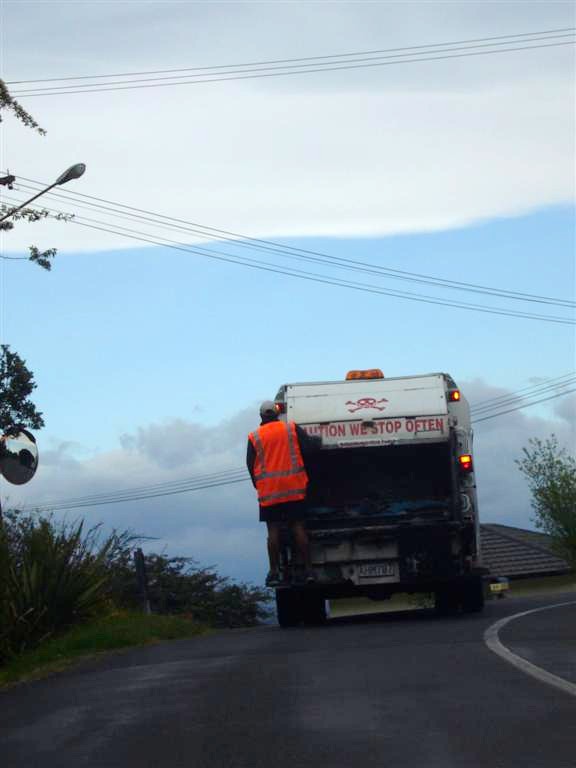
Rubbish Guy

Rubbish collection takes place once a week in Nelson; we are on the Tuesday route. Usually one guy drives, and one or two guys run after the truck throwing the rubbish onto the back of the truck, (and missing once in a while.) The truck sometimes stops but often just keeps going, and the guys in the back hop on the truck only where there is a bit of distance between homes. Nelson is hilly and the streets narrow and winding, so these guys on the back are some of the most physically fit blokes; in fact, I think one or two current All Blacks might have been rubbish guys previously.

Me, I'm starting to like the paparazza shooting.

Thursday, September 28, 2006

Loading at Port Nelson

Logs, pine boards, seafood and apples are loaded in Nelson and exported. The comings and goings of the ships can be found in our newspaper, The Nelson Mail.

Wednesday, September 27, 2006

Whale?

I wish, but here is the full view. It is made of Takaka Marble, the same material used in our Parliament, and sits just to the right of where the Jazzy Girls were performing.

Tuesday, September 26, 2006

Monday, September 25, 2006

Ultra V Day

A particularly thin patch of ozone layer traveled over New Zealand yesterday. In the short drive to reshoot the Early Settlers, Ben turned into Rudolf the Red Nosed Camera Guy. On days like these, it's best to dress like a bank robber when going outside, so we had long sleeves, hats and very dark sunglasses on top of a thick layer of sun screen. To the sunnies-clad eye, the sea was an unseasonable turquoise (the color usually reserved for later in the summer on very hot days), but we were surprised to see the photos don't show this. I know there is a scientific explanation somewhere.

Sunday, September 24, 2006

Closer look

You find this on the base of "Symonds Gas Lamp". The lamp is replica of original as mentioned there, but it still one of the Nelson's symbolic items.

Saturday, September 23, 2006

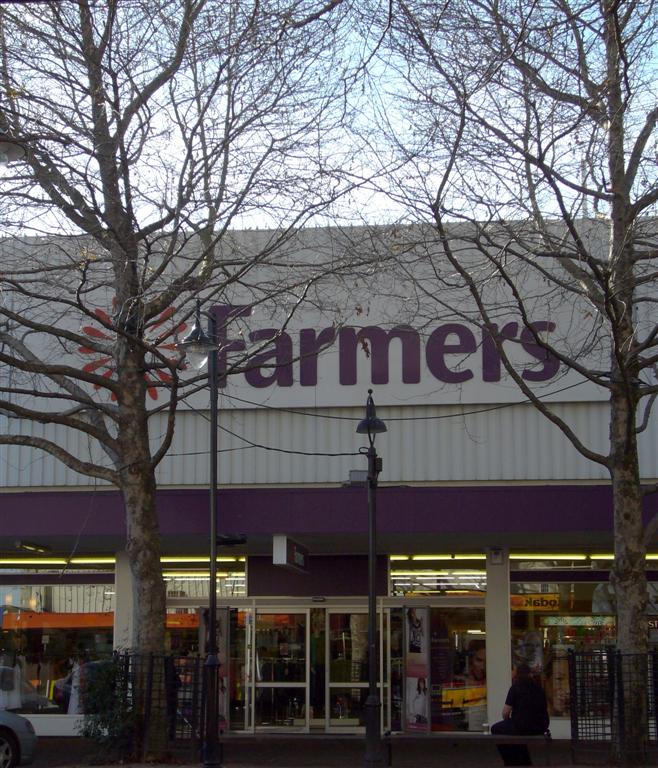
Farmers

Farmers is the name of the biggest department store chain in New Zealand. When we first found this out, we thought it was a joke, akin to calling the two main island of a nation North Island and South Island. Well, we know better now. Again, on Trafalgar Street, halfway between the Information Centre and the Cathedral, with a separate home store on Hardy Street. (Farmers in Richmond Mall has two-stories and two escalators; when it opened a couple of years ago, we went to Richmond just have a ride. I can't believe I just blogged it; I used to catch a train from Basement Level 4!)

And in case you haven't read this, Irredento Urbanista goes nation-wide in Peru. (Someone tell me how to pronounce Trujillo!!)

Friday, September 22, 2006

Mapua

Mapua is about 30 minutes drive from our place. The blue building is a cafe specializing in smoked fish, the one in the front is Flax Restaurant, and in between is a fish and chips shop. They all serve great food. Yesterday's wharf is to the left of Flax Restaurant.

Rudy is breaking Guatemalan rules and hosting a Name Those Cats contest.

Thursday, September 21, 2006

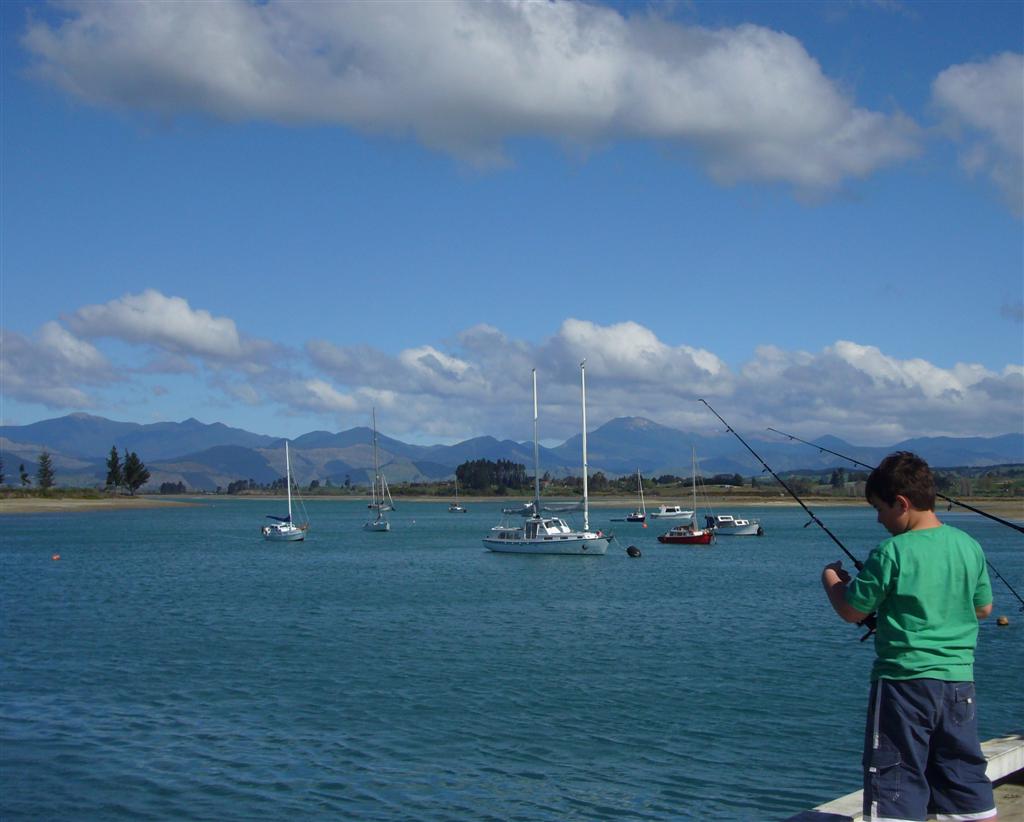
Mapua Wharf, Sunday

The boy in green and a blonde boy had a bet: the boy in green was told if he didn't catch a fish first, he would have to kiss the one the blonde boy caught. Go, Boy in Green!

Wednesday, September 20, 2006

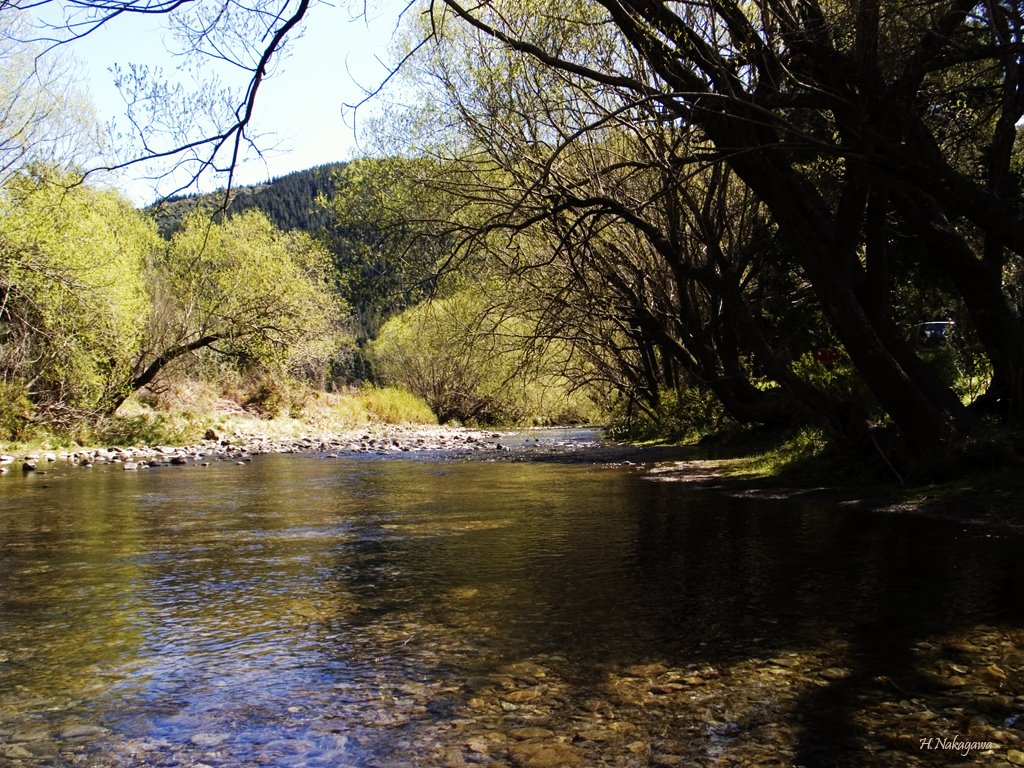
Roding River Recreational Reserve

While driving down Richmond/Hope way, we decided to take a road we had never been on before. What we found at the end of the sealed road is this picnic area. There was a large grass field as well as a starting point for three walkways.

Tuesday, September 19, 2006

Hope

Charles from the UK requested photos of Richmond and Hope where his cousins live.

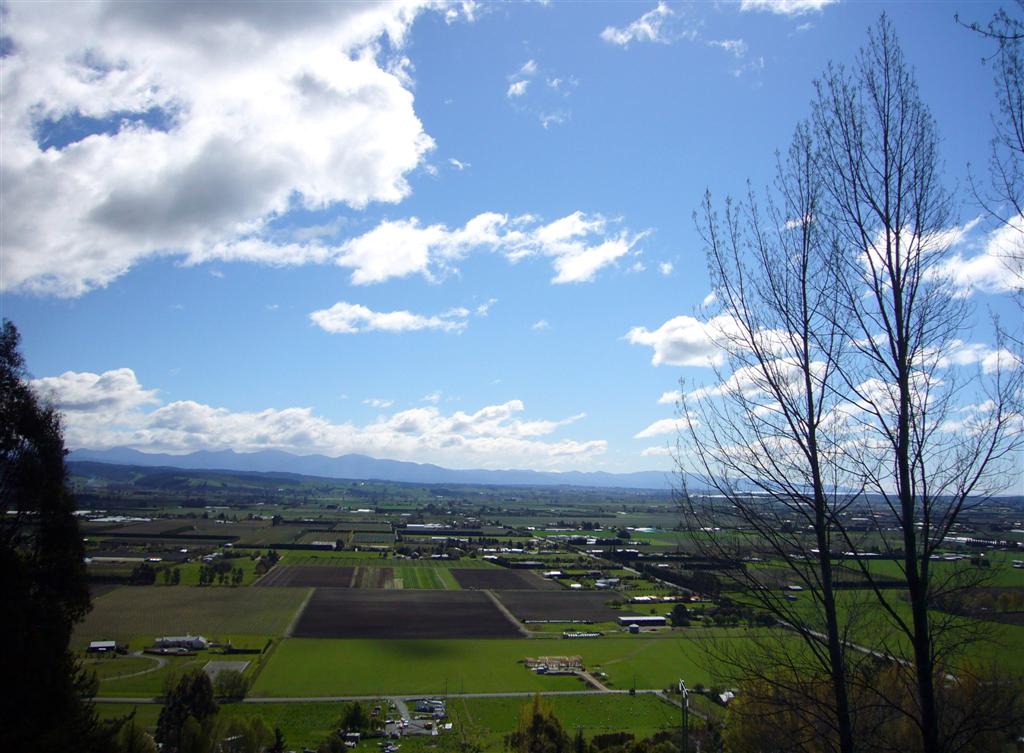
The city of Nelson is the largest town in Nelson Region; just to the west is Tasman Region, and its largest town is Richmond. However, Nelson and Richmond are 10km apart with suburbs in between, so it is hard to tell where one ends and the other begings. The two regions share similar characteristics, and saw an explosive growth in population and development in the last decade.

Hope is immediately to the west of Richmond, approximately bottom 1/3 of this photo. I think a large part of Hope used to be sheep and dairy farms sprinkled with fruit orchards, but now there are a few farms, lifestyle blocks (1, 5, 10 acre sections with farmlettes, big gardens, or horse paddocks,) as well as new, mainly agricultural businesses. There are quite a few good speciality plant nursaries in Hope for whose who are so inclined; these are family-owned-and-operated, light on marketing, heavy on quality and good prices.

Monday, September 18, 2006

What the Early Setlers See

Along Rocks Road, on the waterfront, there are a few restaurants, a fish monger, and the yacht club in this area. The building in the background is a recently-built apartment. A few more is in development but locals cannot afford the units, so the owners are mostly absentee-owners/investors from the larger cities ("main centres") and overseas. Many units are hired out as holiday accommodations.The statue is called “Early Settlers”; we will introduce this properly when we get a nice photo, and you bet Meg knows the controversy over this one.

I wonder how the early setlers feel seeing the developments and changes in the area.